

Marketing budgets are easy to let grow and hard to cut back once they are running. The spend becomes embedded, the activities become routine, and no one asks what each line is actually returning. Benchmarking makes the question unavoidable.
The challenge
A regional hotel chain was running its marketing expense significantly above industry benchmark. The chain operated at medium to high occupancy with a weekend peak, but the marketing spend had not been analysed against what it was returning. There was no review of which activities were working and which were not. The budget had grown without scrutiny.
What we did
We ran a Profit Boost Review. Two years of financials, benchmarked against hotel-specific standards for a chain of this type and size. Marketing expense was well above the range. We ran a discovery process with the client and the marketing team to understand what each activity was doing, what it was costing, and what the team itself thought was and was not working.
The recommendations identified specific areas of spend to pull back: activities that were not returning measurable results and were not essential to the business’s market position. A target marketing expense was set, tracked through quarterly reviews over 12 months.
The result
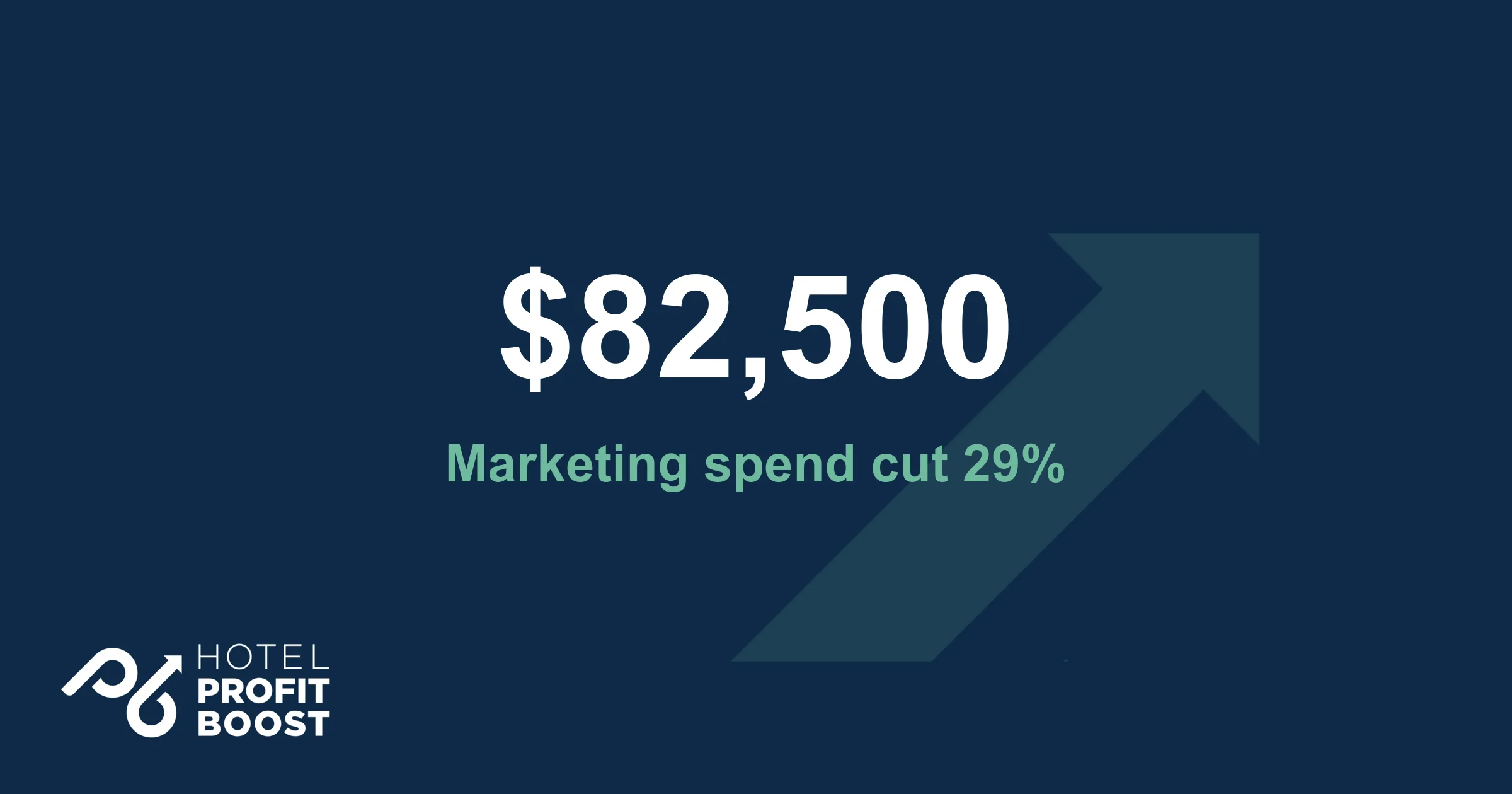
- Marketing expense: $82,500 saving per year, a 29% reduction
Achieved within 18 months. Revenue did not fall. The business kept the marketing that was working and stopped paying for the marketing that was not. Review it, quantify it, report it – business then implement it.