

Maintenance departments can be easy to overlook. They are not a profit centre, they are a cost, and when the work appears to be getting done it can be hard to see how much labour is going in to do it. Benchmarking is what makes the problem visible.
The challenge
A capital city hotel with more than 70 rooms, a restaurant and a strong corporate market was carrying far more maintenance labour than its size warranted. The hotel ran at high occupancy but the maintenance wage cost, including oncosts, was significantly above what a property of this type and size should be running. The team was over-resourced and the task allocation was inefficient.
What we did
We ran a Profit Boost Review. Two years of financials, benchmarked against hotels of comparable size and type. The maintenance wage line was clear. We ran a discovery process with the client and the maintenance team to understand what was actually being done, how long it was taking, and what tasks could be allocated differently.
The recommendations: a reduced labour structure and a more efficient task allocation. A target cost reduction was set and shared with the team, and performance was tracked through a quarterly review cycle.
The result
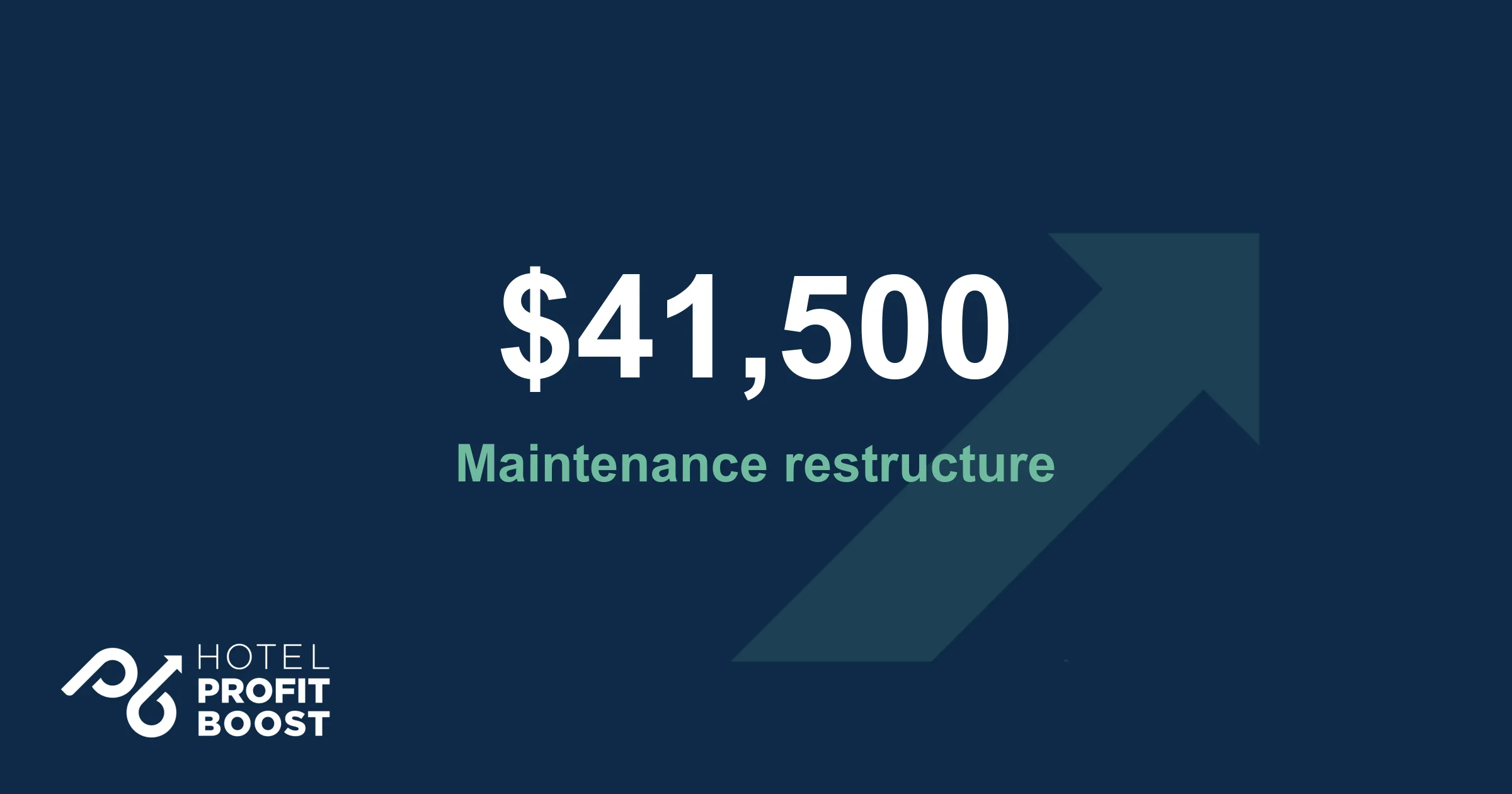
- Maintenance wage costs (including oncosts): $41,500 saving per year, 18.4% more efficient
Achieved within 12 months. The maintenance work still got done. The property just stopped paying for labour it did not need. Review it, quantify it, report it – business then implement it.